
Arcanum the Third
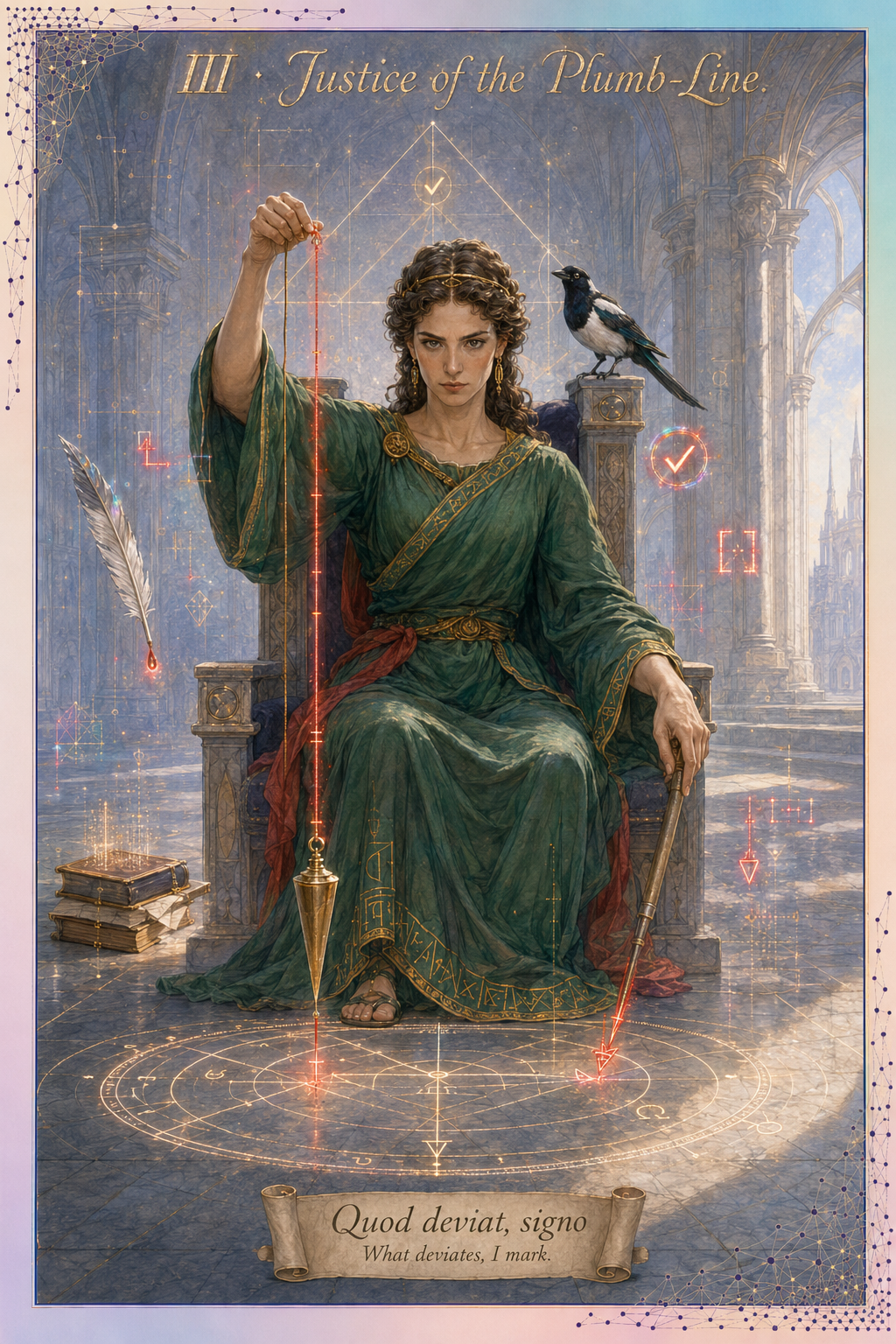
What Kind of AI Agent
You save the file, and a red underline appears under a variable three lines above, catching a typo you would have missed on this pass. You never asked it to check, but the system had been watching in the background.
You seem to want AI to run quietly in the background, watching the low-level details for you and speaking up when something looks off. The work you hand over is continuous checking, such as stray typos, odd results, or a pipeline that quietly broke without notifying you, while the real thinking stays with you.
This seems to come from a clear judgment about attention. Your attention is limited, so you would rather have a steady checker hold the small issues for you and surface them when needed, whether or not you remembered to check. Giving the system that permission to speak up is also a form of trust, though that trust seems reserved for small problems you can verify at a glance.
What makes it worth having in that role is its ability to catch things you might otherwise have missed. That may explain why reproducibility, automated checks, and a record of what ran often matter to you more than the tool offering its own opinions. What can most easily break this setup is noise. If it flags too often, or keeps warning you about things that are actually fine, you may gradually stop paying close attention, and when a truly important flag appears, you might ignore that one too.
Justice represents a working style that gives the system permission to keep watching and proactively flag issues. That permission is deliberately limited to things that are clear and checkable, while the final judgment remains with you.
The Tarot Archetype
Justice sits frontally with scales and sword, watchful and impersonal. She is the card of discriminating attention, what is true, what deviant, what must be marked. Justice does not punish. She flags.
The Scientific Instrument
The plumb-line, a weighted cord defining true vertical, used in surveying, geodesy, and gravity science. Eratosthenes used analogous measurements to calculate Earth's circumference. The plumb is a passive reference. It does not measure, it discloses what aligns and what doesn't.
Where to Start
- Turn on the validators you already have but ignore. A linter, a type-checker, a spell-checker. Let them run on every save instead of on demand.
- Add one check for an error that has actually bitten you. A data-drift alert on an input file, a pre-commit hook, a CI check that flags a changed result.
- Guard the signal. The moment you start ignoring the squiggles, the system has failed. Tune the rules down to the errors you genuinely want flagged, so a real one never hides in the noise.
Strength
Catches small errors continuously, freeing the user from the burden of remembering to check.
Signature Failure Mode
Alert fatigue. The Inspector's true positives get drowned by false ones, and eventually the user stops reading the squiggles and a real error slips through. Alert fatigue is the Sentinel's failure mode in miniature.
What's at Stake
Most of the time a good tool is invisible. You look straight through it at the work. Justice is the tool designed to become visible at one specific moment, the instant something is wrong, and only then. That is the whole idea. It makes the error stand out precisely because everything else has faded into the background. The risk is a failure of attention. When the flags come too often, or for things that are not really wrong, you stop seeing them, and the one that mattered slips past with the rest.
Background reading. Heidegger on the present-at-hand, the tool that stops withdrawing from awareness and becomes conspicuous at the moment of breakdown (Being and Time, §16).
How You Got Here
The survey routes you to this card based on the following signals:
- Q3 dominated by narrow daily operations.
- Q11 emphasizes "Experiment tracking" and "Reproducibility" alongside the daily-coding qualities, pulling initiative toward the system.
- Q10 (setup-burden willingness) often shows "It catches mistakes I would otherwise miss" as a primary justification.
A snapshot, not a verdict. This card reflects how you work with AI tools right now, which is shaped as much by what you have had access to as by what you would choose. Justice is often a quiet layer running underneath whatever other card describes your main way of working; whether it is your whole stance depends a lot on how far you have tuned your tools.
https://cumc.co1.qualtrics.com/jfe/form/SV_9uWW9GgwPuRucoS
Or share this card directly: justice