
Arcanum the Fourth
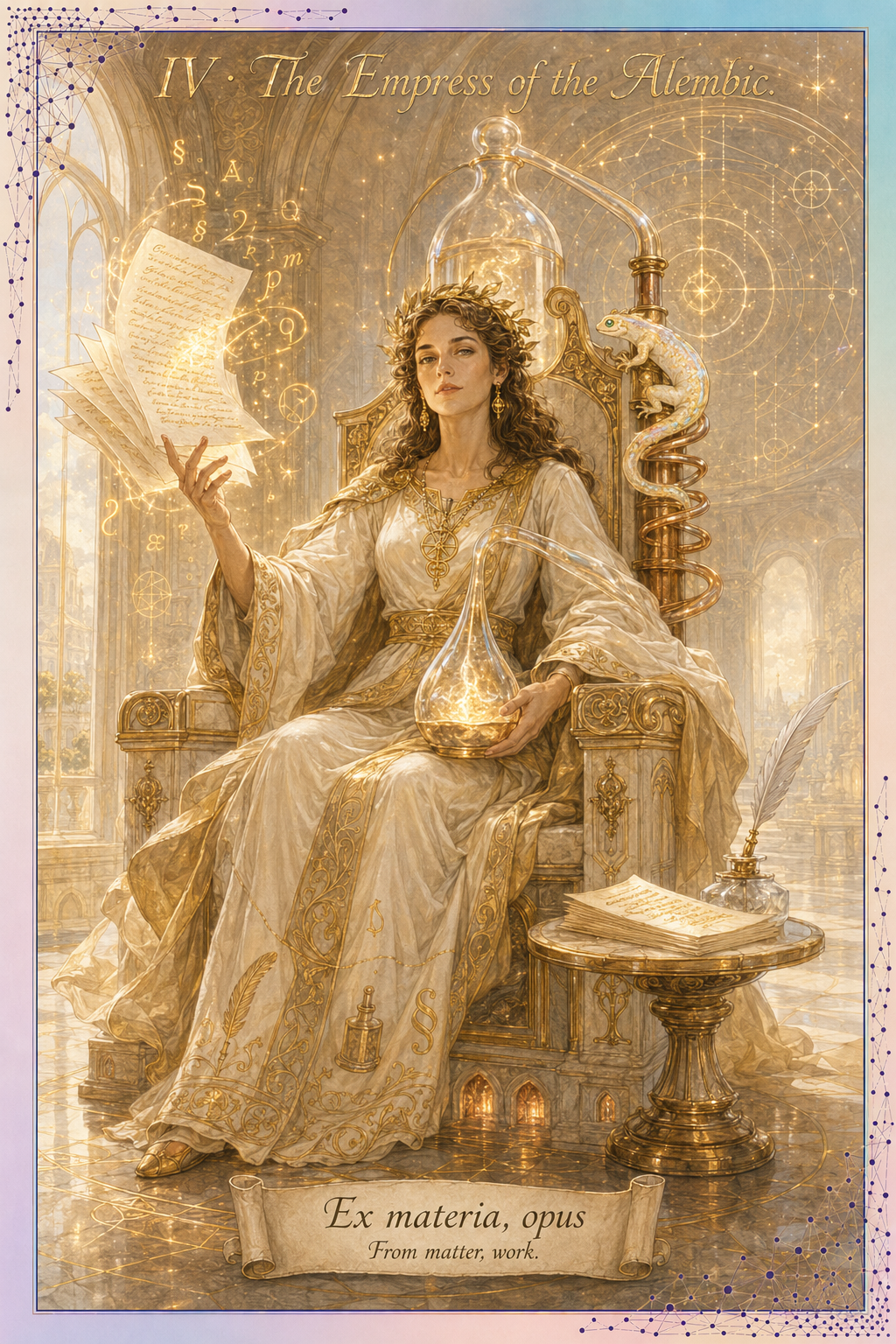
What Kind of AI Agent
You write a careful half-page brief (the dataset, the question, the constraints, the output you want), paste it in, and come back to a finished first draft of the section. It is not right yet, but the blank page is gone, and you can see exactly what to fix.
You seem comfortable handing AI a fairly complete piece of work, a literature scan, an exploratory analysis, a first draft of a section, as long as you have defined the task and set its frame first. The initiative tends to stay with you, since you appear to want the tool to wait for your go-ahead rather than pick its own next move. You also want to be able to inspect what comes back, which is where your review carries real weight. The failures that seem to bother you most are the confident ones, the work that sounds settled while quietly missing the context that mattered. You look willing to absorb some setup cost for a tool, especially when it saves real time or genuinely understands your data.
Underneath this there seems to be a clear sense of what a good result looks like before you start, which is what lets you delegate an entire phase without losing the thread. The Empress reads as a working style that trusts AI with the labor and keeps the judgment close.
The Tarot Archetype
The Empress is the card of productive abundance, fertile, regal, gravely creative. She does not perform craft. She presides over the bringing-forth of work. The card is about commissioned creation. She is given the materia and produces a piece.
The Scientific Instrument
The alembic, distillation apparatus, from the Arabic al-anbīq. The vessel through which raw matter is refined into essence, alchemy's foundational object, and the bridge from medieval alchemy to modern chemistry. The alembic transforms inputs into a defined output through a controlled phase.
Where to Start
- Invest in the brief rather than the prompt. Before commissioning a phase, write down the dataset, the goal, the constraints, and what a good output looks like. Most failures trace back to a brief that left something unsaid.
- Commission one self-contained phase at a time. A methods draft, an exploratory analysis, a module refactor. Audit each one fully before starting the next, rather than chaining commissions you have not checked.
- Audit for the misframed failure, beyond just the obvious one. The dangerous output is the one that looks finished but answers the wrong question. Check it against your intent rather than only for errors.
Strength
Handles the messy middle of a phase. Skips the blank-page problem.
Signature Failure Mode
Only as good as the brief. If the prompt is misframed, the Empress produces confidently wrong work, the Q4 misunderstands my dataset / project context cluster from the pilot. The work looks done, and in fact it is done wrongly, at scale.
What's at Stake
The Empress is pure making. The system is asked only to execute the how, and to execute it well, leaving aside why the work matters. That is its strength. It skips the blank page and produces. But a brief can never say everything. Some of what you meant stays unspoken, and the system fills that gap with assumptions of its own. When those assumptions are wrong you do not get an obvious error. You get confident, finished-looking work that is wrong at scale.
Background reading. Aristotle on technē, productive knowledge aimed at the made thing (Nicomachean Ethics, VI.4). Polanyi on tacit knowledge, since the brief is always under-specified and the gap is filled by the system's own priors.
How You Got Here
The survey routes you to this card based on the following signals:
- Q3 mixes narrow operations (coding) with broader ones (literature search, EDA, brainstorming), scope score around 2.0.
- Q11 emphasizes "Human control / approval checkpoints" strongly, pulling initiative to user.
- Q4 frustrations heavy on "overconfident" / "misunderstands dataset," reinforcing user-initiated commissioning rather than autonomous action.
A snapshot, not a verdict. This card reflects how you work with AI tools right now, which is shaped as much by what you have had access to as by what you would choose. How broad a phase you are willing to commission tends to grow with your trust in the tool, so read the Empress as a stance that shifts, not a fixed type.
https://cumc.co1.qualtrics.com/jfe/form/SV_9uWW9GgwPuRucoS
Or share this card directly: empress